
Microchip ENC28J60T/SS: A Comprehensive Guide to the Stand-Alone Ethernet Controller
In the realm of embedded electronics, adding Ethernet connectivity has traditionally been a complex task, often requiring a powerful processor and extensive software overhead. The Microchip ENC28J60T/SS stands as a pivotal solution, a highly integrated stand-alone Ethernet controller that empowers even the most modest microcontrollers to interface with local networks and the internet. This guide delves into the core features, internal architecture, and typical application scenarios of this influential IC.
The ENC28J60T/SS is designed to implement all necessary functions for Ethernet communication, adhering to the IEEE 802.3 standard. Its key innovation lies in its independence; it handles all the low-level protocol management, including packet framing, cyclic redundancy check (CRC), and error checking. This offloads a significant processing burden from the host microcontroller, which only needs to manage the higher-level TCP/IP stack through a simple Serial Peripheral Interface (SPI).
At the heart of the device is a suite of integrated peripherals. It contains 10BASE-T capable physical layer (PHY) modules and a Media Access Controller (MAC). The controller includes buffer memory for received and transmitted packets, programmable filters for packet address recognition, and support for both unicast, multicast, and broadcast packets. This integration means designers require very few external components—essentially just a pulse transformer (magnetics) and passive components—to create a complete Ethernet node.
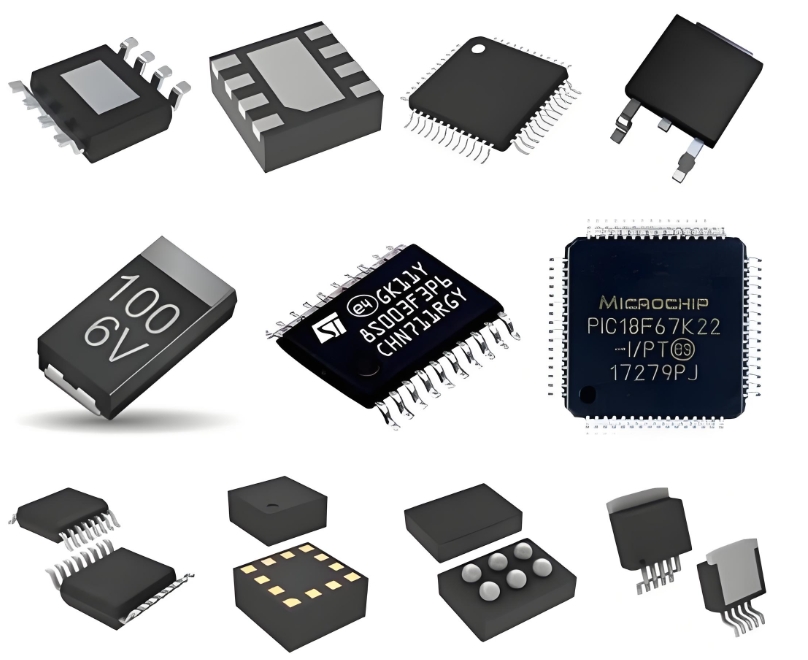
A typical application circuit revolves around an SPI connection to a host microcontroller. The host processor sends and receives data packets by reading from and writing to the controller's internal buffer memory via simple SPI commands. The ENC28J60T/SS then takes care of all the Ethernet-specific tasks: it constructs the Ethernet frame, adds the preamble and CRC, and manages the electrical signaling on the twisted-pair cable. For incoming traffic, it checks the CRC, filters packets based on predefined rules, and alerts the host microcontroller when a valid packet has been received.
This controller is particularly favored in applications where cost, space, and power are critical constraints. It is a cornerstone in projects involving Internet of Things (IoT) sensor nodes, industrial control systems, building automation, and any device requiring a network connection for remote monitoring or control. Its ability to bring network connectivity to 8-bit and 16-bit microcontrollers dramatically expands the capabilities of low-end processing platforms.
Despite its advantages, designers must be aware of its limitations. The 10 Mbps speed is insufficient for high-bandwidth applications, and the limited 8 KB buffer memory requires careful management of network traffic to avoid packet loss. Implementing a full TCP/IP stack on the host microcontroller remains a software challenge, though numerous open-source and commercial libraries are available to simplify this process.
ICGOODFIND: The Microchip ENC28J60T/SS remains an enduring and cost-effective solution for embedding Ethernet connectivity. Its stand-alone nature simplifies hardware design and reduces host processor overhead, making it an excellent choice for a vast array of networked embedded systems where high speed is not a prerequisite.
Keywords: Ethernet Controller, Embedded Systems, SPI Interface, IEEE 802.3, IoT Connectivity.

