
NXP BB181: A Comprehensive Technical Overview of the Low-Voltage Comparator
In the realm of precision analog electronics, the comparator stands as a fundamental building block, critical for applications requiring decision-making based on voltage levels. The NXP BB181 emerges as a standout component in this category, specifically engineered for ultra-low voltage operation and high precision. This article provides a detailed technical examination of its architecture, key features, and typical application scenarios.
The BB181 is a single, high-accuracy voltage comparator designed to operate from a single supply voltage as low as 1.6 V, making it exceptionally suited for modern portable and battery-powered devices where energy efficiency is paramount. Its ability to function with such a minimal supply voltage extends the usable life of batteries, a critical factor in applications like handheld medical devices, wearable technology, and wireless sensors.
A defining characteristic of the BB181 is its remarkably low supply current of typically 6 µA. This minuscule power consumption ensures that the comparator adds negligible load to the system's power budget, which is essential for maintaining overall efficiency. Despite this low power draw, the device does not compromise on performance. It features a low input offset voltage, which is crucial for making accurate comparisons, especially when dealing with small analog signals. Furthermore, it boasts push-pull output capabilities, eliminating the need for an external pull-up resistor and simplifying circuit design while providing rail-to-rail output swing for maximum dynamic range.
The internal architecture of the BB181 is optimized for stability and speed. It includes internal hysteresis, a vital feature that prevents output oscillation when the input signal is noisy or changes slowly near the trigger threshold. This built-in noise immunity enhances the reliability of the system in electrically noisy environments. The device's propagation delay, while not the fastest on the market, is well-balanced against its power consumption, making it ideal for applications where speed is important but ultra-high frequency operation is not required, such as in battery management systems (BMS) for monitoring undervoltage and overvoltage conditions.
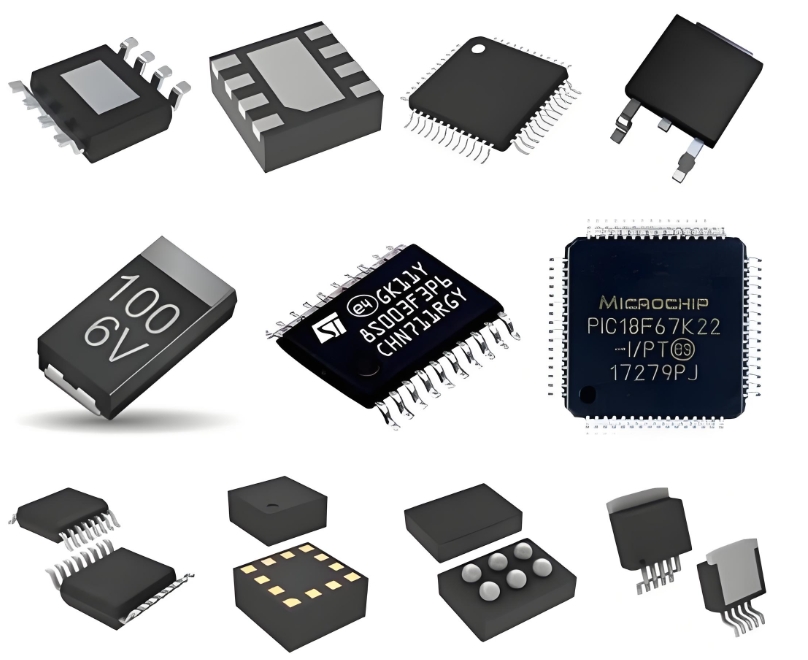
Typical applications for the NXP BB181 are vast and varied. Its primary use case is in power-sensitive systems including:
Threshold Detection/Discrimination: Monitoring when a sensor signal crosses a predefined level.
Window Comparators: Ensuring a voltage remains within a specified high and low limit.
Zero-Crossing Detectors: Identifying the point where an AC signal changes polarity.
Wake-Up Circuits: In IoT devices, where a comparator can activate a main microcontroller only when a specific event occurs, drastically reducing average power consumption.
ICGOODFIND: The NXP BB181 is a highly optimized low-voltage comparator that successfully bridges the gap between ultra-low power consumption and reliable precision. Its ability to operate down to 1.6V, combined with its microampere-level current draw and integrated features like hysteresis and push-pull output, makes it an exceptional choice for designers of next-generation portable and battery-operated electronics. It is a quintessential component for enhancing energy efficiency without sacrificing critical performance.
Keywords: Low-Voltage Comparator, Ultra-Low Power Consumption, Battery-Powered Devices, Precision Analog, NXP Semiconductors.

